

Treatment
Gum grafts
Cover the root, protect the tooth.
Treatment for receding gums. We rebuild lost tissue to protect the root, reduce sensitivity and improve how the smile looks.
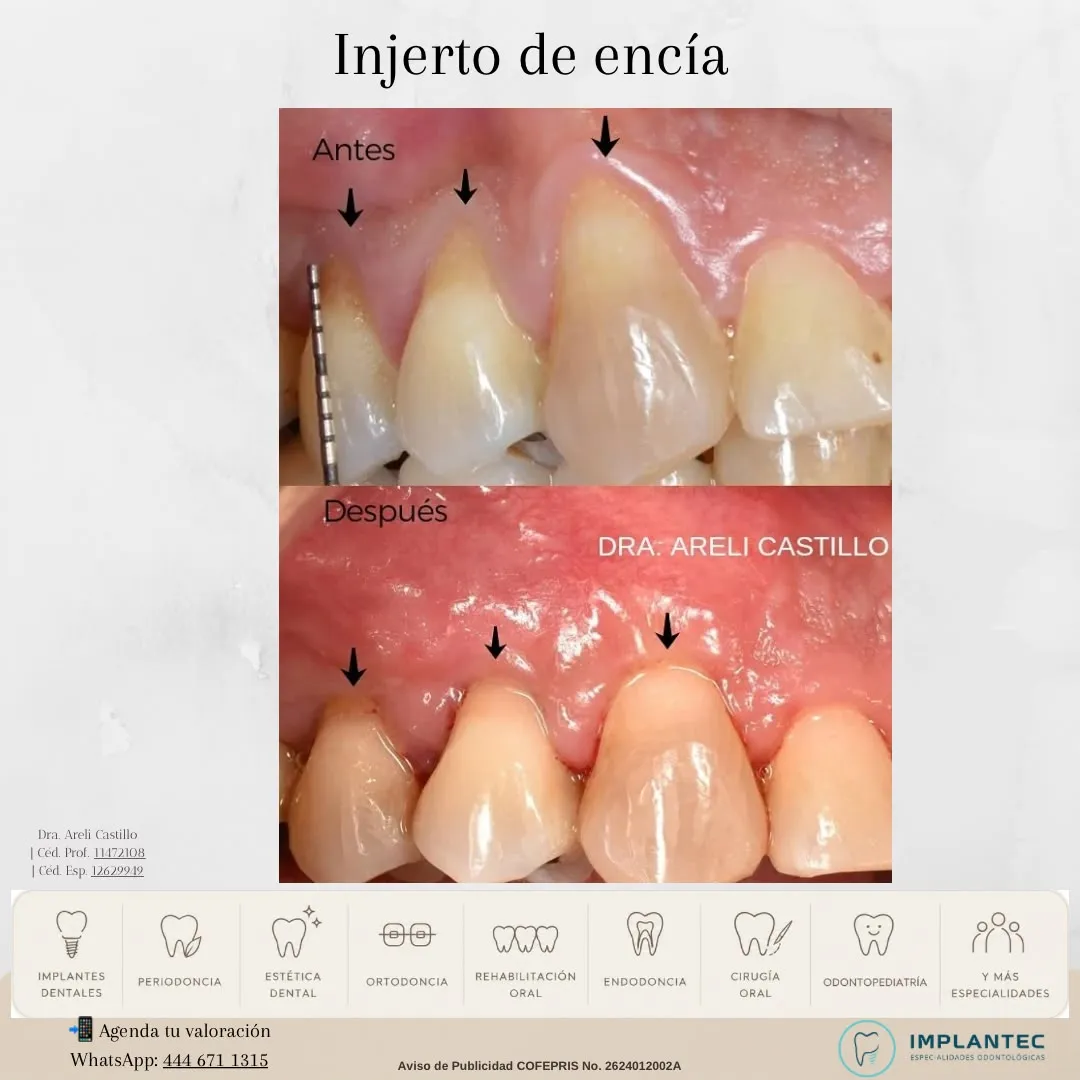
When the gum recedes it leaves the root exposed. It hurts with cold, the tooth looks longer and, over time, root decay becomes more likely. A gum graft rebuilds that tissue.
We use microsurgical techniques that aim to cover the root with as little trauma as possible. Depending on the case we take tissue from the palate or use a collagen matrix to avoid a second wound.
What it solves
- Receding gums that leave the root exposed
- Sensitivity to cold from exposed roots
- Teeth that look longer or show a yellow neck
- Lack of gum tissue around teeth or implants
How it is done
Step by step
- 01
Diagnosis
We measure the recession and look for the cause (hard brushing, bite, tooth position, periodontitis).
- 02
Graft
We take tissue from the palate, or use a collagen matrix, and place it over the root with microsurgical techniques.
- 03
Healing
One or two weeks of simple care. The tissue integrates over a few weeks.
- 04
Follow-up
We check the gum and correct the cause so it does not recede again.
Who is a candidate
Is this for me?
- Patients with gum recession on one or several teeth
- People about to get braces who have thin gums
- Implant patients who need more gum tissue around the implant
Common questions
What people ask us
Does a gum graft hurt?
It is done under local anesthesia. The donor site on the palate can be sore for a few days; medication and a protective stent keep it manageable.
Will it recede again?
If the cause is corrected (for example, changing your brushing technique), the result is stable long term.
Before we talk treatments, we want to meet you.
Message us on WhatsApp and tell us what is going on. We will let you know what records we need and help you book your evaluation.