

Treatment
Periodontics (gum care)
Healthy gums, a smile on better ground.
Diagnosis and treatment of gingivitis, periodontitis, gum recession and bone loss by a board-certified specialist.
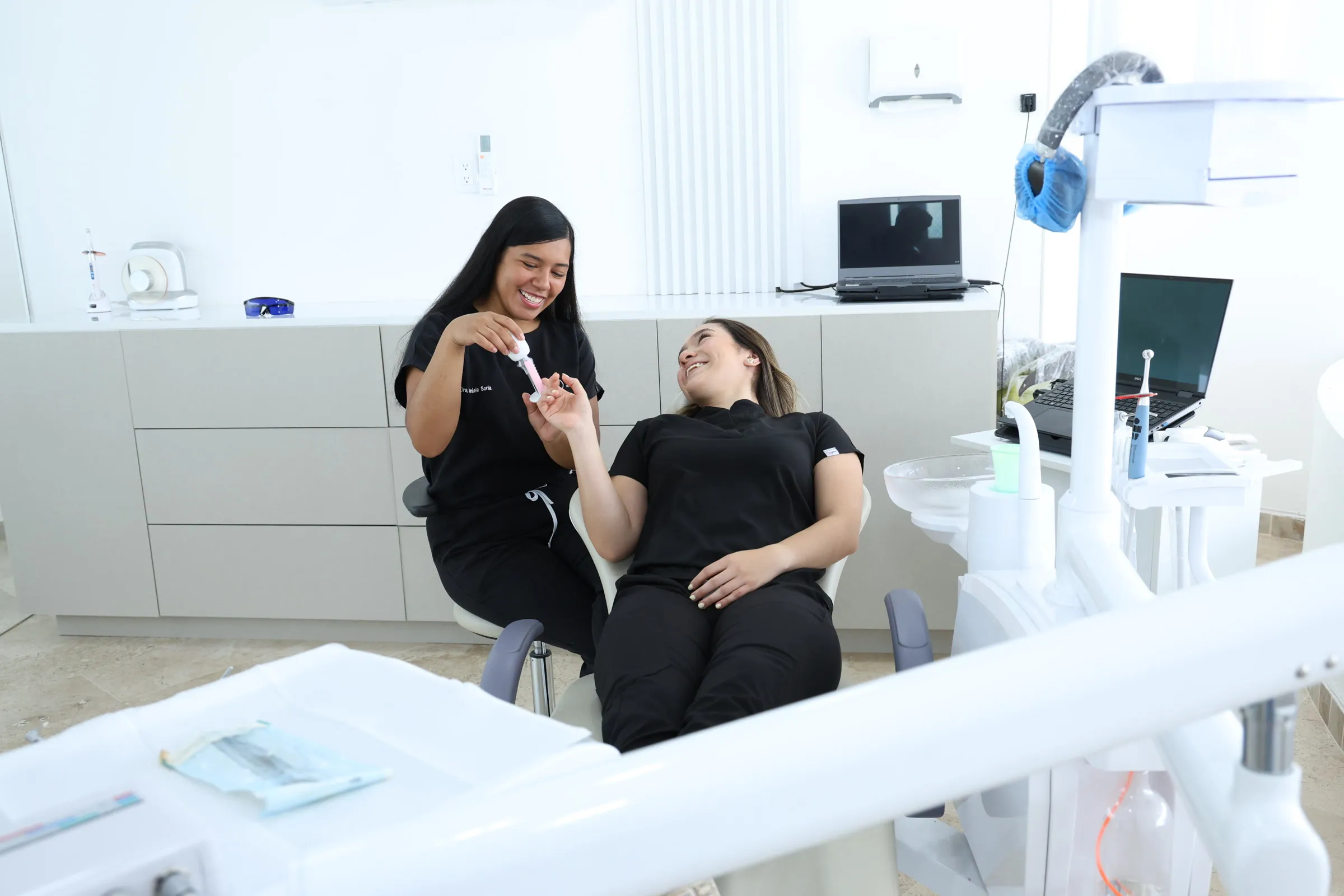
Bleeding gums should never be considered normal. Swelling, bleeding, bad breath, loose teeth or receding gums can be signs of periodontal disease, the leading cause of tooth loss in adults.
Dr. Areli Castillo is a periodontist certified by the Mexican Board of Periodontics. Her practice focuses on diagnosing and treating problems in the tissues that surround and support your teeth, from gingivitis to advanced cases with bone loss. Catching it in time can be what decides whether you keep your teeth.
What it solves
- Gums that bleed when you brush or on their own
- Swelling, redness or persistent bad breath
- Loose teeth, or teeth that look longer because the gum has receded
- Bone loss around the teeth (periodontitis)
How it is done
Step by step
- 01
Periodontal diagnosis
Gum probing, X-rays and photographs. We measure how much support each tooth has lost.
- 02
Initial therapy
Deep cleaning (scaling and root planing) by quadrant, under anesthesia, to remove tartar and bacteria below the gum line.
- 03
Re-evaluation
A few weeks later we measure again. Many cases are controlled at this stage.
- 04
Surgical phase, if needed
Periodontal surgery, regeneration or grafts in areas that did not respond.
- 05
Maintenance
Periodic cleanings every three to six months. This is what keeps the result.
Who is a candidate
Is this for me?
- Anyone with bleeding gums, even mild
- Patients diagnosed with periodontitis or with a family history of it
- People about to get implants or braces who need healthy gums first
- Patients with diabetes, who are at higher risk for gum disease
Common questions
What people ask us
Is it normal for my gums to bleed?
No. Bleeding is the earliest sign of inflammation. Treated early, as gingivitis, it is reversible. Once it progresses to periodontitis, lost bone does not come back on its own.
Can periodontitis be cured?
It can be controlled. With treatment and maintenance the disease stops and in some areas bone can be regenerated. Without maintenance it tends to come back.
What does a periodontist do that a general dentist does not?
A periodontist specializes in the tissues that hold the tooth, gum and bone, with specific training in periodontal surgery, grafting, regeneration and implants.
Before we talk treatments, we want to meet you.
Message us on WhatsApp and tell us what is going on. We will let you know what records we need and help you book your evaluation.